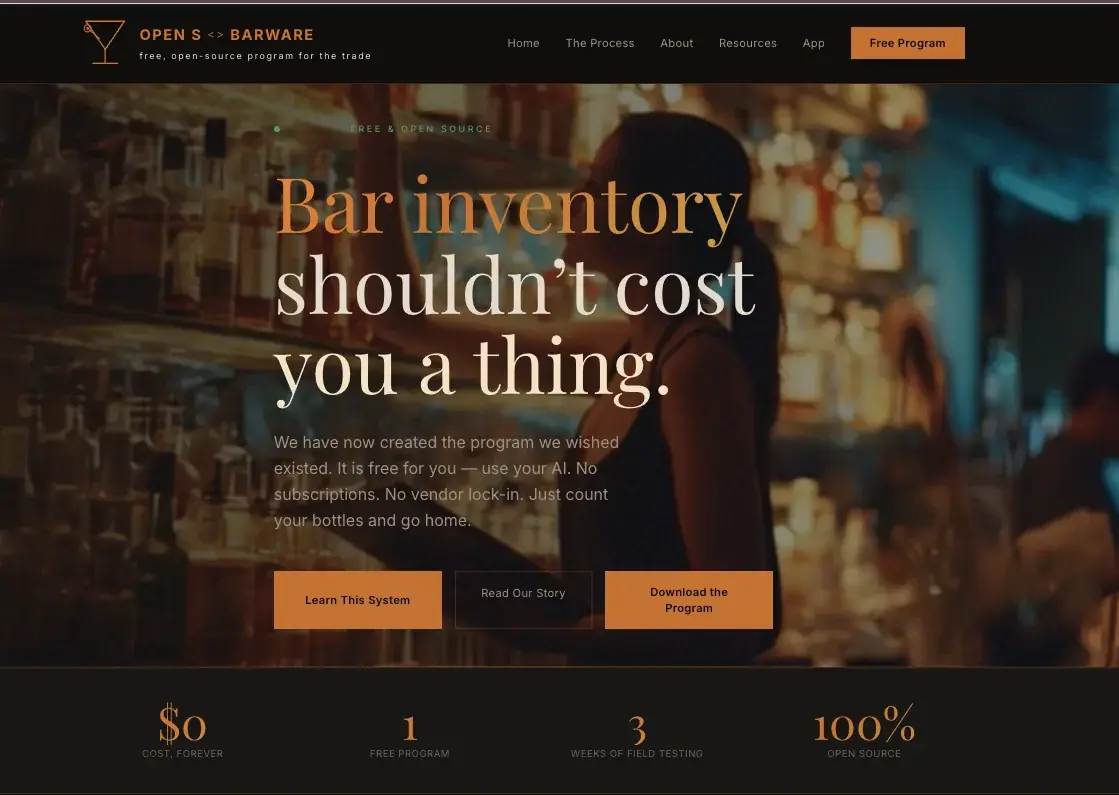
Open Source Barware hospitality inventory website screenshot

Restaurant, hotel, and venue websites built by people who understand the floor.

Ohio hospitality web design, local SEO, booking paths, and operational systems — for restaurants, bars, hotels, and venues that need the site to support service, not just look the part.

Hospitality Marketing · Ohio

A hospitality website has to sell the experience and support the operation.

Restaurants, bars, hotels, and venues do not need another pretty homepage that ignores service. Guests want menus, hours, reservations, rooms or events, private dining, catering, directions, and confidence. Operators need the site to capture demand, reduce friction, and report what is actually working.

Resonant builds those sites from an operator perspective. We also maintain free tools used on real floors — including Open Source Barware — and a longer hospitality systems direction at Intelligent Hospitality Systems. Those projects stay free of hard sell; they exist so operators can work. The marketing work on this site is separate: paid custom systems when a venue needs the web stack wired to how money moves.

What the build should include

  • Fast mobile pages for menus, reservations, events, rooms or packages, private dining, catering, and order flows.
  • Ohio-aware local SEO around cuisine, neighborhood, venue type, and high-intent services.
  • Google Business Profile support, review paths, analytics, and campaign tracking.
  • Booking, inquiry, and follow-up systems that route the right information to the right person.
  • AI phone, OpenTable or booking integrations, online ordering paths, and social support where they earn their keep.
  • Operational language that proves the venue is run by professionals, not just marketed by an agency.

Why floor experience changes the marketing

Most agencies can write restaurant copy. Fewer can speak clearly about inventory, vendor lock-in, beverage programs, shift realities, and why portal-juggling drains efficiency. That perspective changes the page map, CTAs, and proof — around how hospitality businesses actually make money in Ohio and beyond.

Hospitality Stack

Guest demand on the front end. Operator intelligence behind it.

The website can stay elegant, but the system behind it should understand reservations, inquiries, inventory, reporting, and follow-through.

01

Guest Capture

Menus, reservations, events, catering, private dining, reviews, and calls are planned around how guests decide on mobile.

02

Local Search

Pages are organized around cuisine, venue type, neighborhoods, offers, FAQs, and proof instead of a thin one-page brochure.

03

Operations Proof

Open Source Barware and IHS show the operator-side understanding: inventory, vendors, staff workflow, and usable data.

Common Builds

Restaurant marketing that can become a real operating layer.

Start with the public-facing website and search foundation. Then connect the operational pieces where they remove friction.

WEB

Restaurant Website System

Homepage, menus, reservations, events, private dining, catering, gift cards, reviews, online ordering, and contact paths built for mobile decisions.

SEO

Hospitality Search Foundation

Local pages, menu/service structure, metadata, FAQ schema, Google Business Profile support, social media alignment, and analytics for the channels that matter.

OPS

Inventory and Intelligence Layer

Open Source Barware and IHS positioning can support full inventory management, phone AI, OpenTable integrations, vendor-agnostic operations, and better management visibility.

Questions

Restaurant website and hospitality marketing FAQs

What should a restaurant website include?

Fast mobile menus, reservations, hours, location details, private events or catering pages, reviews, strong photos, local SEO structure, and analytics.

Can marketing connect to restaurant operations?

Yes. The website can route booking inquiries, track campaigns, support inventory or reporting workflows, and reduce manual follow-up.

How does Open Source Barware fit?

It proves Resonant's hospitality work is grounded in real bar operations: inventory, variance, vendor independence, and systems operators can actually use.